
Too Hot for Kids? Surviving July & August on the Costa del Sol (2026)

Oisín Mac Giolla Chuda · Founder and Lead Reviewer, lives on the Costa del Sol Published 17 July 2026 · Last updated 17 July 2026 · First-hand, family-tested
Quick answer
July and August on the Costa del Sol regularly hit 32–38°C, but it is absolutely doable with young kids if you live like a local: beach or pool before 11:30, air-conditioned indoor activities or a siesta from midday to 5pm, then back outdoors from 6pm — Spanish kids play on promenades and in parks until late evening. Indoor play centres from €6 per child and shaded water zones fill the hot hours.
Every summer, the same worried question appears on TripAdvisor and Mumsnet: “Is the Costa del Sol too hot for kids in July/August?” We live here with young children, so here is the honest answer: yes, it’s hot — 32–38°C most days, occasionally more — and no, it doesn’t ruin the holiday, if you run your day the way local families do.
The local schedule (copy this)
The mistake visiting families make is running a northern-European day (out at 10, lunch at 12:30, activities all afternoon) in an Andalusian summer. Local families invert it:
| Time | What to do |
|---|---|
| 8:00–11:30 | Beach, pool, playgrounds, outdoor attractions. This is your prime outdoor window. |
| 11:30–13:30 | Long shady lunch — the main meal of the day here. |
| 13:30–17:30 | Aircon or siesta: indoor play centre, museum, shopping centre, or back to the apartment. Yes, actually nap the small ones. |
| 18:00–20:00 | Pool or beach round two. The light is beautiful and the heat has broken. |
| 20:00–23:00+ | Promenade, playground, dinner. Spanish kids are out until 11pm in summer — yours can be too. |
The siesta isn’t quaint tradition; it’s engineering. Fight it and everyone melts. Adopt it and July here is genuinely lovely. Our own hard rule: between roughly 12pm and 3pm we don’t do direct sun at all — that block belongs to lunch, aircon or the pool at home.
Air-conditioned escapes we’ve tested (the 1pm–6pm window)
These are venues we have visited and reviewed ourselves:

- The Fun House, Fuengirola — soft play in central Fuengirola, €6 per child for two hours, with a toddler room and food that’s actually decent. The best-value hot-afternoon escape on the coast.
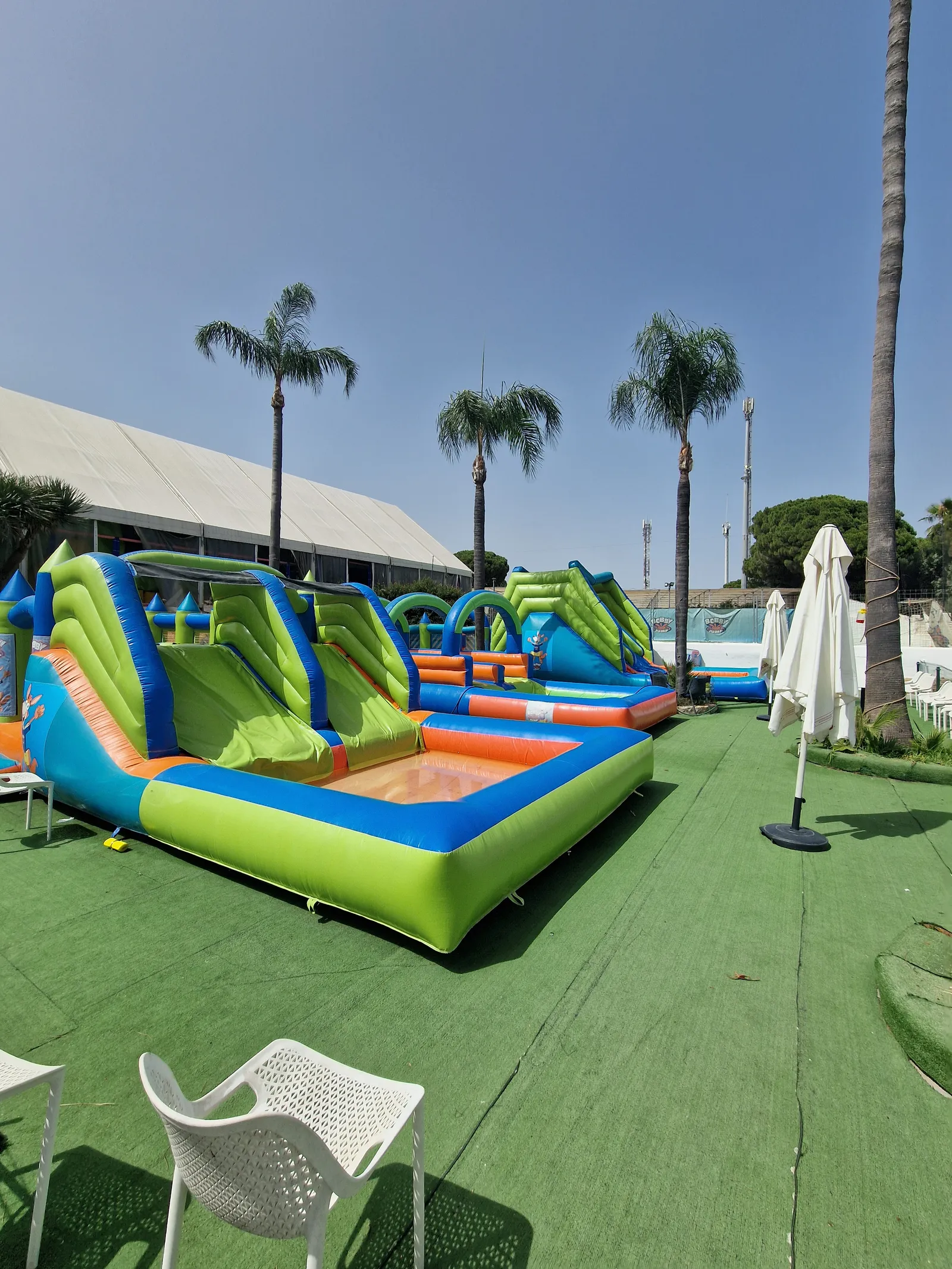
- Bobby Jump, Marbella — €12 per child per hour (grip socks included), six zones, almost all indoors or shaded. In summer its Aqua Jump inflatable water zone opens — jumping and getting wet is about as good as a July afternoon gets.
- PomPom Jump, Málaga — from €14.90 per person; a huge, brand-new indoor activity park whose harnessed high-ropes course thrills kids far too old for soft play.
- Museum of Imagination, Málaga — a short, playful, air-conditioned city-centre stop; pair it with an ice cream on Calle Larios.
Beach tactics that actually work
- Go before 11:30 — by midday the sand gets hot enough to genuinely burn feet, so flip-flops or sandals right to the waterline are a necessity, not a nicety.
- Rent a sunbed: €6–8 per day, and it usually comes with an umbrella. That’s your base of shade for the whole morning — cheaper than a bad sunburn and it turns the beach from an endurance event into an actual rest.
- Use the chiringuitos — the beachside restaurants dotted along every promenade. You sit in the shade with a cold drink and lunch while the kids play on the sand a few metres away. It is, quite simply, the best thing Spanish beach culture does for parents.
Pool hours and the suncream rules
If your accommodation has a pool (many apartments here have a private or shared one), it’s the perfect way to pass the banned 12–3 window. Two rules from experience:
- Suncream at least 30 minutes before they get in the water. It needs time to absorb — apply it at the door and it washes straight off (and greases up the pool for everyone).
- Ease into sun-and-pool days. Kids who aren’t used to this climate can end up feeling genuinely unwell from too much sun and water excitement on day one. Build up gradually, keep the drinks coming, and take the shade breaks before anyone looks pink.
The water parks
Aqualand Torremolinos and AquaMijas are the big two. We haven’t reviewed them yet (it’s on the plan); at the time of writing gate prices run roughly €30–36 for adults with cheaper child tickets, and both get very busy in August — arrive at opening.
Heat rules we actually follow with our kids
- Liquids make or break a day out, more than anything else. Everyone needs far more than they’d drink at home, and kids most of all — bring water (or other drinks) everywhere, refill constantly, and treat an empty bottle as a problem to fix immediately. Most meltdowns here are dehydration wearing a disguise.
- Hats and sunglasses are not a fashion choice. The sun here is genuinely powerful; they’re protective equipment, for kids and adults alike.
- Surfaces get hot — including the footpaths. Pavements, playground equipment and above all sand can burn small feet, so proper footwear matters even for a short walk.
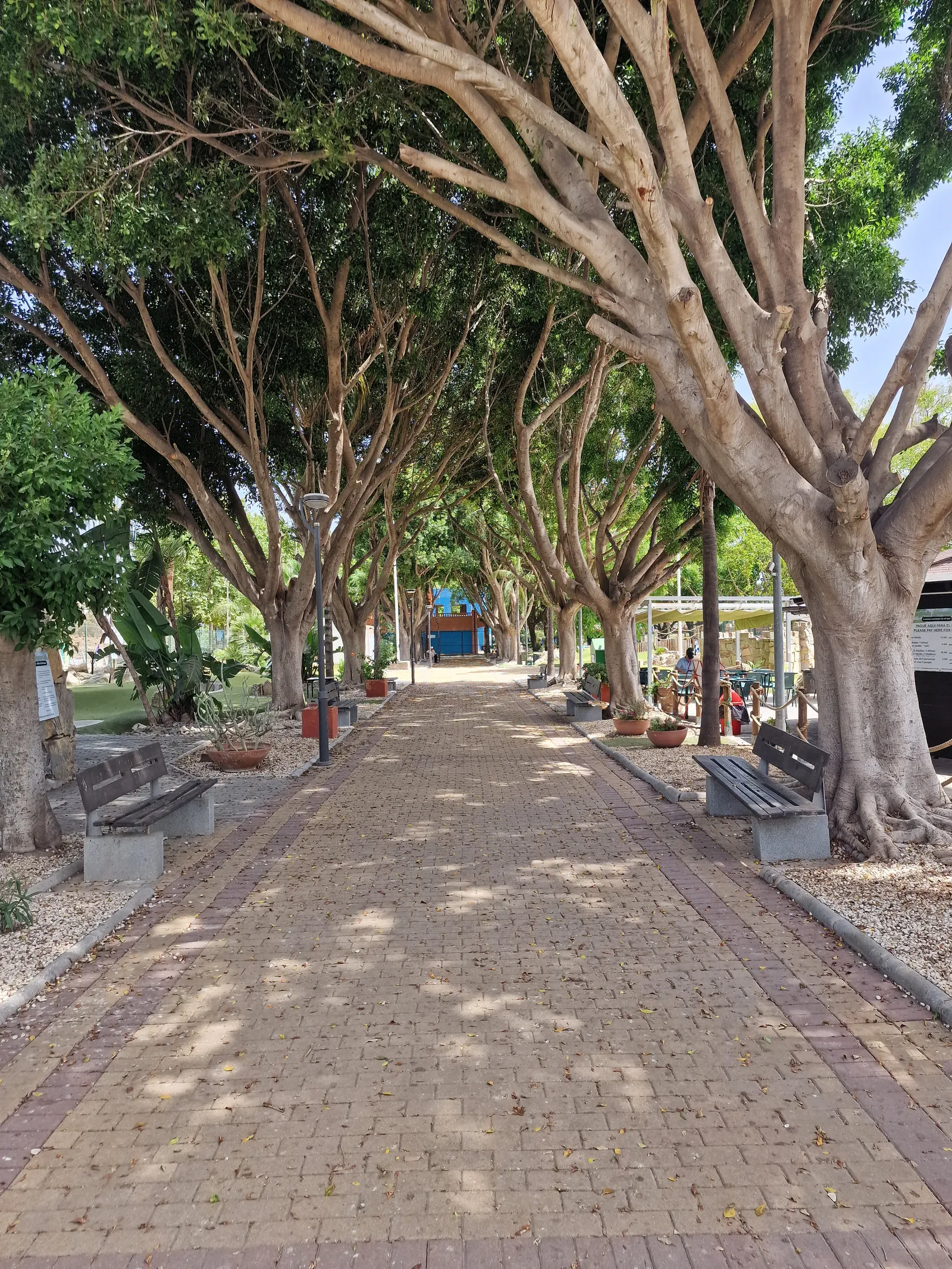
- Shade is a venue feature, not a nice-to-have. Gran Parque de Mijas is huge and free — and almost shadeless, so it’s a 9am or 7pm park in summer, never a 2pm one. Fuengirola Adventure Golf plays under mature trees, which is why it stays viable on warm days (morning slots in August all the same).
- The pram trap: a dark pram in direct sun is an oven. Muslin + clip-on fan, and check the baby often; never drape thick covers.
- Evening playground culture is your friend. The promenade playgrounds fill with local families after 8pm. It feels strange for about one day, then it feels like the whole point of Spain.
Two bits of hard-won advice for the adults
Avoid the “tourist tan”. You’ll see it everywhere: visitors walking around with exactly one side of their body burnt. It happens on day one — you’re so happy to finally be in hot weather that you sit outside with a drink, feeling wonderful, while the sun quietly scalds whichever side faces it. If you’d rather not spend the week looking like a half-cooked side of pork, put suncream on before your first drink outside, not after.
Forgot a hat or sunglasses? Flag down one of the “looky looky” sellers who walk the beaches and promenades — they carry exactly the things tourists forget, at reasonable prices. They’ll start high and a bit of friendly haggling is expected (some tourists treat it as a holiday pastime), but don’t grind them down for sport: they’re working long hot days to support families back home. Haggle kindly.
Related reviews
Every venue mentioned above has a full first-hand review: The Fun House · Bobby Jump Marbella · PomPom Jump · Museum of Imagination · Fuengirola Adventure Golf · Gran Parque de Mijas
Frequently asked questions
Is the Costa del Sol too hot for a toddler in July and August?
No, but you have to plan around the heat rather than fight it. Do outdoor time before 11:30am and after 6pm, and spend the peak hours somewhere air-conditioned — soft play, trampoline parks or museums — or back at your accommodation for a siesta. Avoid unshaded playgrounds and parks entirely between noon and 6pm.
What can kids do in the middle of a hot day on the Costa del Sol?
Air-conditioned indoor play is the local answer: The Fun House in Fuengirola costs €6 per child for two hours, Bobby Jump Marbella is €12 per child per hour with a summer water zone, and PomPom Jump in Málaga is from €14.90 per person. Shopping centres, aquariums and museums also work for the 12pm–5pm window.
Is it normal that Spanish kids are out so late in the evening?
Yes — in summer, family life on the Costa del Sol moves to the evening. Playgrounds and promenades are full of local children at 10pm and later, and restaurants welcome kids at all hours. Shifting your own schedule later (siesta included) is the single best heat adaptation.
Do trampoline parks and soft play centres have air conditioning?
The good ones do. Bobby Jump Marbella and PomPom Jump Málaga are modern, air-conditioned halls, and The Fun House Fuengirola is indoors and cool. Always check before committing to an older venue in August.
Is the sea warm in July and August on the Costa del Sol?
Yes — roughly 23–25°C, the warmest of the year, and comfortable for long swims even for small kids. The bigger issue is the sand: by midday it's too hot for bare feet, so bring sandals right to the waterline.
What should we pack for a summer holiday with young kids?
Sun hats, UV swim tops, high-factor suncream, refillable water bottles for everyone, sandals that can handle hot sand, and a clip-on fan plus light muslin if you're travelling with a pram — a dark pram in direct sun heats up dangerously fast. Air conditioning in your accommodation matters more than any pool feature.
Are the water parks open in July and August?
Yes — high summer is peak season for Aqualand Torremolinos and AquaMijas. Both get very busy in August, so arrive at opening time, and check current prices and hours on their official sites before you go.
What time do families eat dinner in Spain in summer?
Late — local restaurants fill from 9pm and kids are welcome at all hours. If yours can't stretch that far, tourist-area restaurants serve from 6–7pm, or make lunch the main meal the way locals do and keep dinner light.
How much does a sunbed cost on the Costa del Sol?
Around €6–8 per day, and it usually comes with an umbrella — which makes it the cheapest reliable shade on the beach. Combine it with a chiringuito (beachside restaurant) for lunch and parents get a shaded base all morning while the kids play on the sand.
About the author
Oisín Mac Giolla Chuda
Founder and Lead Reviewer · Costa del Sol, Malaga Province, Spain
Oisín lives on the Costa del Sol with his wife and two young children — and every single activity on this site is reviewed as a family. The kids test each venue in real conditions, and their honest verdicts (which can be brutal) shape every score, alongside the practical details parents actually need: real prices, parking, shade, food and pram access.
Every review is based on a first-hand family visit — Oisín brings his own young children to test each activity in real conditions, and their honest feedback feeds directly into the scores, alongside practical criteria including access, value, comfort, and family suitability.
Full reviewer profileKeep planning
- Rainy Days with Kids Indoor activities on the Costa del Sol for kids, tested first-hand by a local family — soft play, trampoline parks and museums with real prices and honest verdicts.
- Trampoline Parks Compared Bobby Jump Marbella vs PomPom Jump Málaga and the rest — a first-hand comparison of Costa del Sol trampoline parks: prices, toddler areas, cafés and verdicts by age.